 Rufus R. Noble
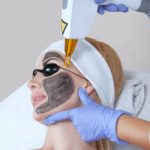
 Laser resurfacing is becoming more popular for facial rejuvenation. Ablative lasers, including erbium:yttrium-aluminum-garnet (Erbium: YAG) and carbon dioxide (CO2) devices, smooth skin by inducing dermal remodeling (Scheuer et al. 1). The authors have found that Erbium-YAG lasers with wavelength 2940 can cause less damage to the dermis and less hypopigmentation when used as ablation lasers. This also promotes faster healing.2,3 Fractional CO2 Lasers were developed in an effort to reduce thermal injury. They deliver energy in microcolumns, leaving a tissue scaffold unaffected with intact dermal vessels. Erbium lasers are capable of complete ablative skin resurfacing without causing undue dermal damage.
PREOPERATIVE READYING
Fitzpatrick skin types I and II are best for Erbium laser treatment. Topical tretinoin is applied 2-3 times per week over 4-6 weeks and then stopped seven days prior to laser treatment. One day prior to the procedure, acyclovir is taken four times daily for a week. ( View Video 1 [online], which shows preoperative facial analyses.)
Video 1
Video 1 from “Laser Resurfacing: Safety and Technique” Video 1 of “Laser Resurfacing Safety and Technique”.
SAFETY CONSIDERATIONS
Safety from thermal injury and fire is of paramount importance. All operating room staff and patients must wear eye protection. Metal eye protection for the patient is required to avoid corneal injury.
If oxygen is needed, it should be turned off 1 minute prior to treatment. To reduce the chance of drape ignition, moist towels should be placed around the perimeter of the treatment area. ( View Video 2 [online], which shows safety measures and laser setting.)
Video 2
Video 2 from “Laser Resurfacing: Safety and Technique” Video 2 of “Laser Resurfacing Safety and Technique”.
TECHNIQUE
Betadine is used to prepare the face. The Profile dual-mode Erbium YAG laser from Sciton, Inc., Palo Alto, Calif., is set at an ablative level of 100 microns. The treatment is done using a systematic method with two passes in each zone and 50% overlap. ( View Video 1 [online], which shows preoperative facial analysis. The “Paprika” bleed indicates the end of treatment. The mandibular edge can be blended by passing the laser in an oblique direction. The perioral area and forehead may require a third pass. ( View Video 3 [online] to see the Erbium-YAG laser technique.
Video 3
Erbium:YAG laser technique. Video 3 of “Laser Resurfacing Safety and Technique”.
Postoperative Care
Stratamed, a silicone-based ointment (Stratpharma AG Basel, Switzerland), is applied immediately after laser treatment and continues for 24 hours. Alastin, a wound-healing balm from ALASTIN Skincare in Carlsbad (Calif.), is then used daily for seven days. Patients are discharged home but have frequent follow-up monitoring for potential, albeit rare, complications, including hyper/hypopigmentation, skin necrosis, skin sloughing, prolonged erythema, and infection.1 Methylprednisolone taper and cephalexin 500 mg 4 times daily for four doses are started on postoperative day 1. ( View Video 4 [online] for details on postoperative care).
Methods
A literature search using PubMed, EMBASE, and Web of Science was conducted on April 2, 2019, by searching for [(sebaceous Hyperplasia)] as well as [(laser[s], Fraxel CO2, Pulse dye Laser, Diode Xe-Cl Excimer Argon KTP Ruby Alexandrite or Nd: YAG).
Laser hair treatment risks
Blisters can be more common in people with darker complexions. A rare side effect can be the hair treated turning gray or more hair growing in the area treated.
Do not let an unlicensed technician handle your project. It would help if you only went to a doctor you trust. Check the credentials of any doctor or technician who will be performing laser hair removal.